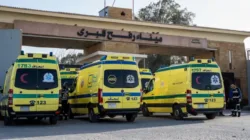
Not every open crossing is a gateway to salvation. In Gaza, when one hears that the Rafah Crossing has “opened,” the mind immediately conjures images of stranded patients, exhausted travelers, and wounded souls trapped behind fences. The reopening no longer signals a return to life—it has become a performance stripped of its humanity. No footsteps echoing with life—just a string of restrictions, security measures, and political entanglements that turn this “lifeline” into a barely pulsing ventilator.
Since its so-called trial reopening days ago, the Rafah Crossing—shuttered since the occupation forces stormed Rafah in May 2024—has become a mirror reflecting the absurdity of the ongoing assault on Palestinians. Managed like a multinational security operation, the crossing now demands that pain be scheduled and the path out of suffering be pre-approved.
The crossing’s “opening” comes under strict surveillance: travelers’ names are submitted to multiple security agencies, vetted by Israeli intelligence, and monitored by cameras as Israeli forces remotely control the gates—more dystopian fiction than humanitarian reality.
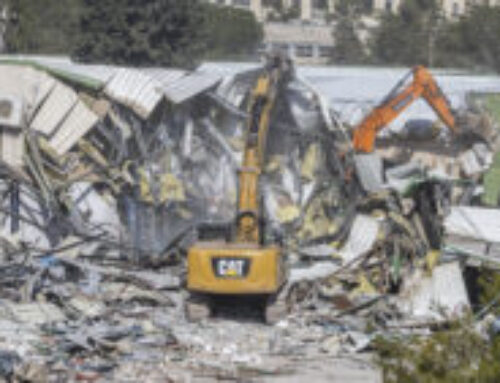
Even those entering Gaza are subjected to invasive scrutiny, passing through newly constructed pathways amid the rubble of destruction. The crossing itself, damaged by bombings and raids, was hastily patched—not to serve as a true lifeline but to restrict and filter the flow of humanity.
The lack of a clear mechanism for transferring patients and the fog of political and administrative ambiguity only intensifies the crisis. Thousands await evacuation for medical care, including hundreds in critical condition and children battling cancer. Time becomes the enemy, and the slow wheels of bureaucracy move faster toward death than toward relief.
This crossing—meant to reopen as a humanitarian priority—has instead become a new theater for redesigning the blockade. From security coordination to identity scrutiny, from invasive searches to remote gate control, the reopening sketches the outline of an open-air prison.
The consequences extend beyond the sick. Previous closures shattered the dreams of thousands of students, robbing them of years of their lives and thrusting them from academic ambitions back into the limbo of waiting rooms. For those who survived the bombs, the bureaucracy might still crush them.
The reopening of Rafah, in this form, doesn’t lift the siege—it repackages it. An opening under surveillance, burdened with conditions and military oversight, only reinforces the pain. It’s an opening that delivers no healing, rescues no lives, and instead deepens the sense of abandonment. It leaves Palestinians suspended in a hollow hope—alone, again, facing a slow-moving clock and endlessly postponed decisions.