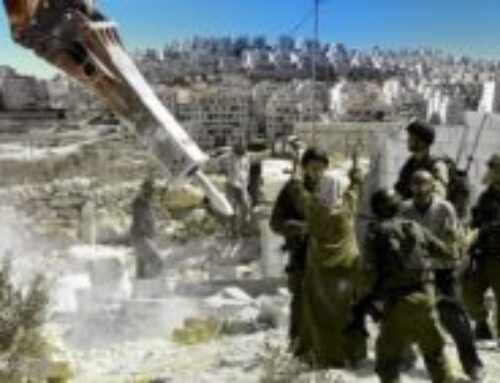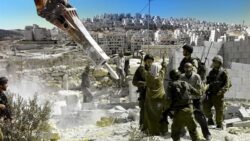
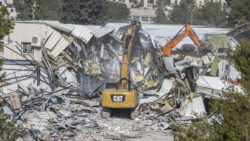
In a dangerous and unprecedented escalation, the usurping entity demolished the main headquarters of the United Nations Relief and Works Agency for Palestine Refugees (UNRWA) in the Sheikh Jarrah neighborhood of occupied Al-Quds, in a crime that transcends aggression and enters the realm of systematic political targeting.
What happened on January 20, 2026, was more than the demolition of an administrative building; it was a clear step aimed at erasing the international memory of the Palestinian refugee cause. For decades, UNRWA has represented the UN’s custodianship over this issue, making its presence a threat to the colonial narrative that seeks to silence the truth, neutralize history, and uproot symbolism—especially in Al-Quds, where UNRWA’s existence has long been viewed as a political timebomb.
The path to this demolition did not begin overnight. Since 2017, the usurping entity has gradually moved to expel UNRWA from the city—first by restricting its services, then by choking its operations through cutting off water and electricity, and stripping it of the tax exemptions guaranteed by international agreements.
This escalating campaign culminated in the storming of the agency’s headquarters, the destruction of its facilities, and the symbolic act of lowering the United Nations flag and hoisting the flag of the usurping entity in its place—an explicit violation of international law and an aggressive attempt to impose sovereignty over Al-Quds by force, even if it means destroying UN institutions.
But the issue goes beyond geography. Erasing UNRWA from Al-Quds is an attempt to erase the symbolism of the right of return at its roots—to redefine the Palestinian refugee as a closed chapter rather than a living humanitarian cause. It is part of a larger project to erase refugee camps not just as physical spaces, but as historical and political concepts, as is happening now in the West Bank through the targeting and demolition of camps and the stripping of refugee identity.
What follows the demolition is even more dangerous. The 42-dunam plot where UNRWA once stood is slated to become a new settlement project, with over 1,400 housing units for ultra-Orthodox settlers, in the heart of Sheikh Jarrah—part of a wider plan to eliminate the remaining Arab and Islamic character of Al-Quds.
The message is clear: there is no place for Palestinian memory or international presence in Al-Quds—only for settlement projects that enforce a violent reality through force, not legitimacy.
In the face of this escalation, a pressing question arises again: will the world continue to watch silently as international institutions are violated, or will the demolition of UNRWA’s headquarters finally awaken what remains of the conscience of international law?
Al-Quds is being violated in broad daylight, and international institutions are being dismantled one after another. This is not merely a battle over buildings, but over truth, history, and narrative.
What took place in Sheikh Jarrah is not the end—it is a loud alarm for the future of Al-Quds and the fate of the refugees together.