On their international day, persons with disabilities in Gaza do not appear as a passing humanitarian headline, but as a bleeding mirror of a war that has not only taken lives, but has also torn apart what remained of the ability to withstand pain. There, where rubble intersects with bodies, dust mingles with the groans of the wounded, a new reality has been born—one shaped not by nature, but by shells, baptized by siege, and prolonged by international neglect.
The Birth of Disability from the Womb of Fire
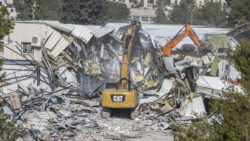
The war waged on Gaza has produced one of the widest waves of disabilities in the history of the conflict, as a result of the use of unprecedented firepower and highly destructive weapons in densely populated areas. Yet fire and explosives were not the sole causes of disability; the collapse of the health system became a silent partner in completing the catastrophe. Destroyed hospitals, operating rooms without electricity, a severe shortage of medical staff and surgical supplies, and an almost total absence of rehabilitation programs—all of this turned treatable injuries into permanent disabilities, transforming wounds into an open-ended fate.
In this harsh scene, activist and specialist in the rights of the wounded and persons with disabilities, Zareef Al-Ghorra, describes the new reality as one of the most brutal and neglected humanitarian files in the post-war period. Thousands of wounded people live without prosthetic limbs, without physical therapy sessions, and without a clear hope of restoring even the minimum bodily function. Disability, he says, does not recede; it deepens day after day, shifting from a medical condition to a complex social and economic tragedy.
Amputated Bodies… Exhausted Homes
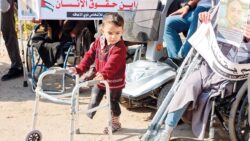
Amputation cases alone have shaken the very structure of society. Children who lost their limbs at an age meant for playgrounds rather than hospital beds. Young men who once supported their families are now unable to walk or work, causing homes to crack under the weight of both loss and incapacity. Paralysis in its various forms has become a constant companion to hundreds of cases that did not receive immediate treatment, while minor injuries that could have been contained turned into permanent disabilities due to the collapse of the health sector.
Pain does not stop at the limits of physical movement. Sensory disabilities—especially loss of sight and hearing—strike victims at the core of their tools for communication and learning, in an environment already deprived of any suitable educational infrastructure or rehabilitation services. Severe facial and bodily disfigurements have pushed many into harsh social isolation, further intensified by the absence of specialized psychological support.
On the psychological level, post-traumatic stress disorders and acute anxiety have become silent disabilities sweeping through children’s behavior and emotional stability, in the absence of routine, safety, and emotional containment. Even chronically ill patients were not spared; the interruption of essential medications led to deaths and the worsening of disabilities among patients with epilepsy and muscular dystrophy, in a painful race against time for a dose of medicine that may never arrive.
Medicine Under Pressure… Decisions Without Alternatives
From inside overwhelmed emergency rooms, the Director General of the Ministry of Health in Gaza, Dr. Munir Al-Barsh, reveals the unprecedented medical challenge facing healthcare teams, particularly with the massive rise in amputation cases since the beginning of the war of genocide. Harsh conditions have forced doctors into agonizing decisions, where amputation has often become the only option to save a life, amid the absence of medications and sufficient surgical capacity.
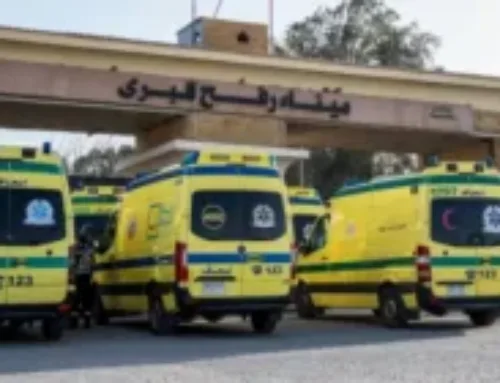
A severe shortage of antibiotics, a ban on the entry of essential and emergency medical supplies, and the spread of drug-resistant infections have all pushed doctors toward brutal, forced solutions. With nearly half of Gaza’s hospitals out of service and many rehabilitation and physiotherapy centers shut down, programs for long-term rehabilitation of the wounded have been disrupted.
The numbers speak without lying: 6,000 recorded amputation cases since the start of the war, including children, women, and youth. 42,000 wounded with life-altering injuries, ranging from amputations and paralysis to motor and sensory disabilities. More than 12,500 patients and wounded in urgent need of travel for treatment unavailable inside the Strip, especially spinal injuries, severe burns, and complex amputations. Yet most evacuation requests remain pending due to delays in issuing permits, despite being submitted through international medical mechanisms. Hundreds of children died while waiting for a crossing permit—what Al-Barsh describes as a slow death sentence.
Compounded Disability… When the Body Fails and Hope is Besieged
In Gaza today, disability is not merely the loss of a limb or a bodily function; it is the loss of an entire support system: healthcare, rehabilitation, education, employment, social protection, and hope for a less cruel tomorrow. Searching for a wheelchair turns into a battle. A physiotherapy session becomes a deferred dream. Fitting a prosthetic limb requires a long, exhausting road of waiting and siege.
Amid this reality, calls are mounting for the establishment of a permanent international fund to rehabilitate persons with disabilities, facilitate the entry of prosthetic limbs and medical supplies, open safe corridors for the wounded to travel, and salvage what can still be saved of the future of thousands of shattered bodies.
On their international day, persons with disabilities in Gaza do not raise banners of celebration. They raise their burdened bodies—what remains of life within them—standing as living witnesses to a war that did not only manufacture death, but exported disability into the future. Disability in Gaza is not a biological fate; it is the direct result of bombardment, siege, collapse, and neglect. It is a true test of the world’s conscience: either it moves to save these lives from falling into the abyss of permanent disability, or it remains a spectator… adding yet another page to the long record of silence.