
In Al-Quds, maps are no longer silent sheets of paper. They have become tools of uprooting, drawn by force and imposed as a fait accompli. Here, construction is not meant to serve people, but to remove people from their place. Plans are no longer discussed as zoning projects, but as instruments of systematic violation that turn land into spoils and the city into a field of domination. The occupation—never merely a political act—is now advancing through its most blatant phase, using urban planning as a cold weapon and planning committees as an administrative façade to impose a coercive reality that recognizes neither rights nor history.
In this context, the Al-Quds Governorate has warned of two new settlement plans placed on the agenda of the so-called District Planning and Building Committee التابعة للكيان الغاصب, considering them a qualitative leap in the project of Judaizing the city. These plans do not represent incidental expansion; rather, they reveal a shift toward a policy of complete geographic closure, aimed at isolating Al-Quds from its Palestinian surroundings and severing its natural ties with the occupied West Bank.
The most dangerous of these plans targets the lands of the former Jerusalem International Airport in Qalandia. This area was not merely land, but a symbol of Palestinian sovereignty in any future horizon. Today, it is intended to be transformed into a massive settlement bloc comprising nearly nine thousand housing units, sealing off northern Al-Quds and turning it into a suffocating belt of occupation.
The threat of this plan lies not only in the number of its settlement units, but in its carefully calculated location. It cuts the only artery connecting Al-Quds to Ramallah, transforming the city into a settlement-encircled island, stripped of geographic depth and natural connection to its Palestinian environment, reduced to a space governed by force rather than right.
Demographically, settlement expansion does not proceed randomly. Estimates by specialists indicate that the Qalandia plan alone will bring tens of thousands of settlers within a few years, alongside systematic policies of demolition, denial of permits, and crushing taxes imposed on Palestinian neighborhoods to forcibly push residents toward displacement. Here, housing is not merely built; the demographic balance is deliberately recalibrated, so that each settlement unit corresponds to a Palestinian family threatened with uprooting.
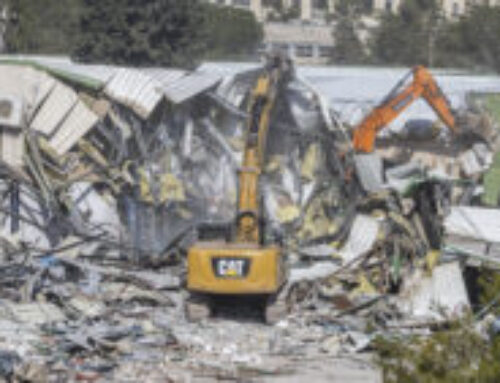
In Sheikh Jarrah, the policy of violation appears in its starkest form. The “Nahalat Shimon” plan does not target empty land, but a neighborhood inhabited for decades, calling for its complete removal in favor of a new settlement. What is unfolding is a fully fledged process of forced displacement, employing a dual legal system: laws that protect the settler, and others wielded as a whip against the Palestinian—even within the courts of the usurping entity.
The assault does not stop at construction. It extends to dismantling the social and urban fabric through so-called “settlement linkage projects” that divide neighborhoods and erase their historical role.
In the face of this reality, the Al-Quds Governorate affirms that what is unfolding is a battle for existence, not a planning dispute. Amid international silence, the wager remains on Palestinian steadfastness and their attachment to land, homes, and memory. Al-Quds is being violated by force, but it is protected by will—and the resilience of its people is the final barrier against uprooting.