From the streets of distant capitals to the depths of the human conscience, the question of Palestine stretches like an open wound in the world’s moral awareness: Why do we stand in solidarity with Palestine?
Since the story did not begin today, and the pain has not ended, and because an entire people is still asked every morning to justify its right to life, to land, and to safety.
On the twenty-ninth of November every year, the International Day of Solidarity with the Palestinian People returns to remind the world that the case has not been closed, that the occupation still persists, and that justice remains deferred.
This day is not merely a date on the calendar; it is a living testimony to an ongoing injustice and to a nation whose will has not been broken by more than seven decades of oppression. Since its adoption by the United Nations in 1978, this day has remained a space for memory and conscience, and an affirmation that Palestinians are still denied their most basic rights: freedom, self-determination, and return.
When Palestine Becomes the Cause of All Humanity
Palestine has never been the story of one people alone; it is a mirror for all peoples who have tasted the bitterness of oppression. That is why free people around the world have carried its cause as they carry their own. Nelson Mandela’s words— “Our freedom is incomplete without the freedom of the Palestinians”—were not a mere expression of solidarity, but a truthful diagnosis of the shared destiny of the oppressed across the world.
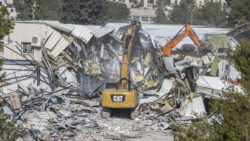
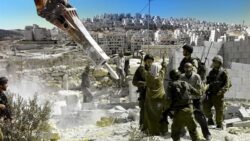
For decades, United Nations resolutions have recognized the inalienable rights of the Palestinian people, yet recognition alone did not stop the bulldozers, did not protect the children, and did not return the refugees to their homes. Here, solidarity becomes a moral necessity rather than a political stance, and a voice for justice when the balance of power falls silent.
The Streets of the World Chants Palestine’s Name
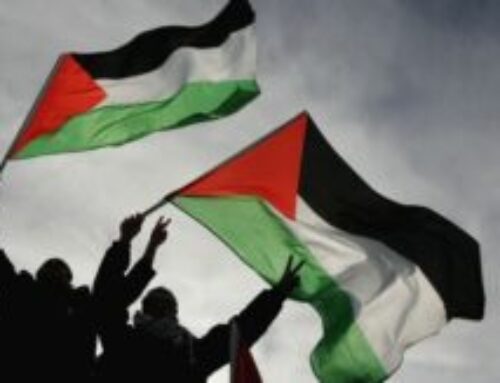
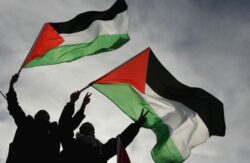
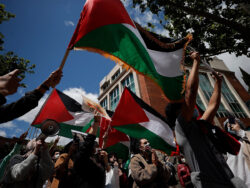
Solidarity with Palestine is no longer confined to official statements or elite positions; it has become a daily scene in the streets. Millions of people have taken to the streets chanting for Palestine in many languages—from London to Istanbul, from New York to Johannesburg, and from Kuala Lumpur to Rabat. Palestinian flags have risen in squares where no Palestinian foot ever tread, yet they carried Palestinian pain as if they had known it for generations.
At the heart of these demonstrations, the message was one: stop the killing, lift the oppression, save the children. The crowds were not defending a political faction, but the very meaning of being human.
Solidarity went beyond chants: donation campaigns, sit-ins, shared prayers, digital movements sweeping across the world, and millions of posts that returned Palestine to the forefront of global awareness. Images of children beneath the rubble, the cries of mothers, and the bodies of the starving proved stronger than all attempts at blackout and distortion.
When the Human Conscience Speaks
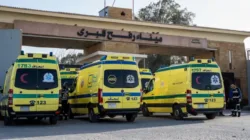
The voice did not remain merely humanitarian; it transformed into explicit positions by international and humanitarian institutions that rarely depart from neutrality. The Red Cross spoke clearly of the collapse of all moral standards in Gaza. Relief organizations described what is happening as an unprecedented catastrophe—indeed, as genocide.
Strong statements, horrifying statistics, warnings of collective annihilation, and calls for an immediate ceasefire all converged to say one thing: what is happening has become unacceptable by any human measure.
Even religious institutions raised their voices. Appeals from the Pope of the Vatican, positions of human-rights bodies, and actions by international courts all met at one point: protecting the Palestinian human being from gratuitous death.
Solidarity… When it Becomes a Duty, not a Choice
At its core, solidarity with Palestine is neither a moral luxury nor a seasonal sympathy; it is an existential position: either you stand with humanity, or you stand silent with killing. It is a declaration that justice is indivisible and that the blood of children is not classified by geography.
We stand in solidarity because Palestinians ask for nothing more than their natural right: to live in their homes without fear, to see their children go to school rather than to the cemetery, to plant their land with wheat instead of graves, and for their refugees to return—not as numbers in a UN file, but as human beings returning to their homes.
Conclusion: Because Silence is Betrayal
Why do we stand in solidarity with Palestine? Because silence in the face of this injustice has become complicity. Because freedom cannot be confined by borders, and dignity cannot be partitioned. Because Palestine today is not only a land under occupation, but a severe moral test for the conscience of the entire world.
In our solidarity, we preserve our humanity before we preserve Palestine. In our chants, we remind the world once again that rights do not expire with time, and that peoples may be defeated materialistically, but they are never defeated morally.
And Palestine… still calls out to us—not to ask for pity, but to awaken within us the true meaning of being Human.